AI training basics for night mode
You’re about to see how your phone learns to snap better pictures when the lights go out. AI training basics for night mode aren’t magic; they’re careful practice. Feed the model plenty of low-light examples, label what a great night shot looks like, and let the computer adjust. Over time, your phone predicts the right settings, what to brighten, and when to blur the rest so your shot isn’t grainy or washed out. It’s like teaching a photographer friend who shoots after dark.
You’ll notice a growing sense for balance, grain, and texture. A diverse training set—street lamps, indoors, car headlights—makes the AI smarter. It learns to preserve detail in shadows while preventing blown highlights. This isn’t a single trick; it’s a toolkit the phone pulls from in real time, delivering cleaner images even if your hands shake. It’s practical from the first few night photos you take.
AI training keeps adapting in night use. Manufacturers test tweaks with real users and push updates that improve performance. You don’t need to understand every math detail to benefit; you’ll simply notice night shots looking less flat and more natural, with colors true to the scene. AI Training: How Top Manufacturers Teach Their Phones to Conquer Dark Scenes Automatically is the backbone, and you’ll see the effect in everyday photos.
Low-light image enhancement explained
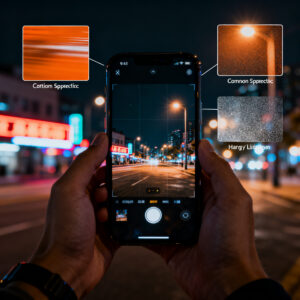
Low-light image enhancement acts like a quiet helper in the dark. It boosts brightness smartly, not by blasting light everywhere. It focuses on faces, textures, and edges, lifting those parts first to avoid a muddy result. Noise reduction is the other half: in darkness, pixels get noisy, so the phone smooths grain without losing detail. The result is a natural look with colors that stay true.
Dynamic range improves too. The phone learns to keep bright areas from blooming while lifting shadows enough to reveal detail. It’s about legibility, not inventing light. Compare yesterday’s night shot to today’s, and you’ll see less blur and more texture, even hand-held or through a window. That’s the practical win of low-light enhancement.
Computational photography techniques overview
Computational photography uses smart tricks instead of relying on a single shot. High dynamic range merging stacks multiple exposures to preserve details in both bright and dark zones, producing one well-balanced image. Denoising with edge preservation cleans grain while keeping lines sharp, so images feel crisp. Motion-aware stabilization and autofocus help you snap faster in dim rooms, yielding steadier results.
Color science plays a big role too. The AI keeps whites from turning blue and greens from getting too loud, which matters in mixed lighting from lamps, screens, and streetlights. These techniques help photos stay closer to what you saw in the moment.
Why this improves your night photos
All these methods work together to feel more like real life: better shadow detail, truer colors, and less noise. Subjects aren’t buried in darkness, and scenes aren’t washed out on review. It’s practical and helps you capture moments you’d otherwise miss.
Exposure stacking algorithms in practice
Exposure stacking captures several quick frames and blends them to improve night shots. Rather than a single photo, the camera borrows brightness from multiple frames. It selects a base exposure and adds frames at slightly different exposures to keep highlights from blowing out while revealing shadows. Alignment is crucial to avoid smudging moving objects or creating ghost outlines. When done right, the image feels brighter and more detailed, especially in darker corners.
Reviewing results shows reduced grain, as averaging multiple frames smooths random noise. The texture of bricks, stars, and faces stay clearer. Movement during a stack can introduce blur or ghosting, though smoother hands reduce this effect. Exposure stacking helps mid-range phones perform closely to high-end models in low-light conditions.
You’ll notice enhanced dynamic range: both dark pockets and bright lights are preserved, avoiding harsh clipping. If a single shot loses detail around a bright window or a dark alley, multiple frames provide more data. The result is a natural look, not an over-processed glow. When done well, exposure stacking turns a murky night into something you can inspect with confidence.
Frame alignment and HDR merging for smartphones
Frame alignment lines up successive frames pixel-for-pixel. Staying still yields tighter alignment and fewer ghosts or double images. HDR merging then blends aligned frames to preserve detail in both bright and dark spots, producing a balanced look where lights and shadows stay distinct.
Natural skin tones in tricky lighting are preserved, and textures like clothing weave remain visible. Clever weighting lets the most accurate parts of each frame win out, discarding the rest. If you test with a bright storefront and a dim alley, edges stay clean and colors remain true. Motion can cause ghost trails if frames don’t align perfectly, so smoother hands and occasional anti-motion blur steps help.
In short, frame alignment is the backbone, and HDR merging is where the magic happens.
Denoising neural networks for cleaner frames
Denoising neural networks act like careful editors, smoothing grain without erasing detail. They learn real textures and distinguish them from random noise across lighting conditions. The result is crisper images where bricks, foliage, and skin textures stay distinct, with less grain in the shadows and a more breathable sky.
Edges are preserved as networks keep lines sharp while reducing dark specks. In very dark spots, denoising helps prevent loss of depth or detail. Sometimes a tiny glow around bright lights emerges after denoising; it’s subtle and fades in the full-resolution image. The major win is cleaner frames that require less post-processing.
How stacking makes your shots brighter
Stacking borrows brightness from several moments, producing a single brighter frame without cranking ISO or holding poses for long. The result looks honest, built from real frames rather than over-processed pixels. It’s like warming a room with many candles instead of a single lamp.
In practice, stacking brightens everyday scenes—city streets, park paths, and dim rooms—revealing more detail in shadows. A steady hand helps, but the stacking method does most of the heavy lifting. If done right, you get a noticeable brightness lift without sacrificing color balance or natural shading. Night modes typically default to stacking, and the underlying principle remains: more frames mean more light and a brighter, more reliable photo.
Sensor fusion and ISP tuning for low light
Sensor fusion blends data from multiple sources to deliver a clearer night shot. In low light, one sensor alone struggles, but combining color, brightness, and motion data yields a smoother image with less noise. This fusion happens in real time, guiding which pixels to trust and how to fill gaps. The ISP (image signal processor) handles cleaning up the image, reducing grain, and preserving edges.
Tuning isn’t identical across phones, but the goal is consistent: natural look without shouting night mode at every corner. Smoother tones and truer skin colors emerge as more effective tuning lands. Manufacturers tune the ISP to work with their sensors and software, balancing brightness, noise reduction, and edge sharpness. Firmware updates can improve night performance, bring more natural color, and reduce artifacts.
How multi-sensor data boosts capture
Night photography often uses data from several sensors. One may excel at brightness, another at color, and a third at motion or depth. By fusing these strengths, you keep more detail and reduce noise. The fusion happens quickly: the phone lines up data from different sensors, weighs their reliability, and stitches a single image. In scenes with mixed lighting, this approach preserves textures and reduces smearing.
Pan and motion benefit too: blending short- and long-exposure data helps maintain textures while reducing blur. The result feels like real life—more detail in bricks, skin, and fabric, with fewer muddy spots.
ISP tuning choices manufacturers use
Manufacturers tune the ISP to fit their sensors and software’s handling of noise and color. They seek a sweet spot where colors stay natural and grain is minimized without looking washed out. HDR handling in the dark varies by device—some blend multiple frames to prevent highlight clipping while bringing up shadows; others rely more on neural processing to add detail where light lags. Each brand creates its own flavor, so night photos can look different across devices.
Firmware updates nudge the ISP further, often making night photography faster or colors more true. You’re getting closer to effortlessly great shots, even in dim environments.
Training data with synthetic low-light datasets
Training data teaches your camera how to see in the dark. Synthetic low-light datasets provide controlled examples you wouldn’t always obtain from real nights. They help separate subject from shadow and train the model to handle corners, edges, and reflections without overfitting to a single scene. By mixing synthetic conditions, you build a robust understanding of how scenes look under scarce light, guiding brightness decisions, detail preservation, and color accuracy.
Synthetic data speeds experimentation, letting you generate thousands of varied night scenarios quickly. You can push algorithms, balance noise vs. detail, and test new ideas without waiting for real-world data. A realistic synthetic baseline helps models generalize to real photos, not just lab math.
In short, synthetic low-light data broadens the model’s experience, leading to better night shots users will notice.
Data augmentation for low-light explained
Data augmentation adds small, smart tweaks to existing images so the model sees more variety. You’ll flip, rotate, and subtly alter color balance to simulate different angles and white balance quirks. You’ll add noise, blur, and shadow overlays to train the model to cope with imperfections. It’s targeted practice that teaches your camera to stay steady under real conditions, preserving faces and backgrounds.
Augmentation also changes exposure, contrast, and color temperature to imitate dusk, midnight, and streetlight scenes. The goal is to help the network recognize the same scene under different lighting, keeping noise in check while preserving edges and textures. When done right, night shots avoid looking over-processed and feel true to life.
Strong augmentation makes the model more resilient, able to handle photos through a foggy window or neon-lit alleys without losing detail. Users get clearer pictures with fewer artifacts and more consistent results across devices.
Why synthetic sets speed night mode optimization
Synthetic sets speed up night mode optimization by providing many controlled examples quickly. You can test extreme shadows, bright highlights, and moving subjects in one batch, tuning exposure, noise reduction, and sharpness faster. It reduces the need for lengthy real-world data collection and covers edge cases hard to capture, like a person moving from streetlight to shadow or reflections on wet pavement. This broad coverage helps the model adapt to sudden lighting shifts, improving reliability in unpredictable situations.
The speed boost enables faster product improvements, with updates released sooner and real-world impact measured quickly. Users experience fewer surprising nights and more consistent night photos. It’s a win for everyone who wants better dark-scene shots on their phone.
How datasets teach models your scenes
Datasets teach models by showing examples that match real scenes. They show how streetlights affect color, where shadows smear edges, and how noise hides details. Labeling and organizing these parts helps the model separate the subject from the background and preserve textures. Better datasets lead to smarter night performance and faster improvements.
When datasets mirror real surroundings, the model handles typical scenes first and then generalizes to new ones. You’ll see improved handling of people, cars, and buildings under varied lighting, with exposure, denoising, and sharpening tuned to keep results natural.
In the end, datasets are the map for your model, guiding a camera toward reliable night performance and a steady climb from hesitation to confidence in darkness.
Model strategies using transfer learning for camera models
Transfer learning helps your camera see better at night. Start with a solid base model and adapt it with night data from your device, saving time and enabling fast, on-device improvements. This approach boosts edge sharpness, color fidelity, and noise reduction that feel natural to your scenes without draining battery.
Next, tailor the model to your camera’s sensor quirks and typical night scenes. Your phone has its own signature—sensor noise, dynamic range, white balance quirks, and lens effects in low light. Transfer learning preserves broad abilities while specializing in preferred lighting conditions. Feed real night images from your city, dim rooms, and backlit scenes to keep results consistent across scenes and avoid muddy outcomes.
Finally, validate with checks that matter: detail clarity, natural color under artificial light, and performance when cropping or zooming. Test on high- and low-contrast scenes, refine the transfer layer to avoid overfitting to a single photo, and aim for a robust model across typical night uses—hands-free shots, moving subjects, and occasional long exposures.
Fine-tuning on real-world night shots
Fine-tune on real-world night shots to capture the quirks you notice. Start with a balanced set—city lights, street scenes, and dim interiors—and preserve textures while keeping skin tones natural under neon or warm bulbs. Learn to distinguish real texture from noise and avoid over-sharpening halos or color shifts.
Test on challenging shots—backlit faces, moving subjects, and deep shadows—to teach the model to avoid muddy shadows and ghosting. Keep the dataset fresh to prevent overfitting to yesterday’s lights. The goal is consistent, crisp results across quick snaps and broader cityscapes.
Implement a lightweight evaluation loop on your device to monitor edge clarity, color accuracy, and noise suppression across batches. If artifacts appear, tweak the fine-tuning layer or bias toward texture preservation. Stay practical: tweak, test, keep what works, and move on to the next real-world batch.
Metrics for low-light image enhancement quality
Measure success with meaningful metrics you can trust. Structural similarity helps avoid choosing scenes that look sharp but feel fake. Peak signal-to-noise ratio checks ensure reduced grain without losing detail. Color accuracy checks keep skin tones and hues believable, not cartoonish. Pair metrics with human checks for motion handling and overall naturalness. Maintain a log of lighting conditions to tune the model over time.
Compare enhancements to a baseline and to a trusted reference night photo. If results beat the baseline on both metrics and perception, you’re on the right track. If not, adjust the transfer layer or fine-tuning steps to push toward your preferred look.
How updates refine your camera AI
Updates progressively teach your camera AI new night-time tricks. You’ll notice steadier white balance and better texture retention as you capture fresh night shots. Updates also adapt to new hardware quirks, keeping shots cohesive across firmware changes or new sensors. Expect improvements without dramatic battery or performance costs.
An on-device AI remains fast and responsive. If you keep shooting, it may adjust modes or quality to save power, then return to high quality when feasible. The best night mode feels nearly invisible—your eye sees a real scene, and the phone does the heavy lifting quietly.
On-device performance and night mode optimization
On-device processing brightens and balances scenes without cloud data, making shots faster and private but power-limited by the device. A mix of fast light adjustments and smarter tone mapping helps preserve shadow detail. Some devices show a live preview closer to the final look to help framing without guessing.
Expect multi-frame blending, noise reduction, and clipping protection. If hardware supports it, exposure, white balance, and color science can be tuned specifically for night scenes. The result should feel natural, not artificially glowing. Look for consistency during movement or mixed lighting to avoid smeared motion or false colors.
On-device processing prioritizes speed. If you’re shooting a lot at night, you may see mode switching or temporary lower quality to save power, then a return to higher detail when possible. The goal is resilience and speed, not a lab-quality image you can’t share.
Quantization, pruning, and power tradeoffs
Quantization reduces numerical precision to save power, while pruning removes parts of the model that aren’t helping much. Together, they make night mode faster and lighter on the battery, but excessive pruning can dull fine detail. Expect crisper edges in static scenes to soften slightly in tricky lighting, and occasional color shifts in high-contrast shots. The aim is natural tones and usable detail with reasonable battery life.
Power tradeoffs extend beyond the camera. Processing frames, screen brightness, and background apps all chew energy. For long night shoots, lower brightness and closing heavy apps helps. Some devices offer a low-power night mode that trades a bit of speed for efficiency, letting you choose between faster previews or higher final quality.
Balancing latency and image quality for you
Latency matters for candid moments. Quick previews help framing, while the final image benefits from a slower refinement pass. You may see a fast initial view, then a crisper result after a short wait. The secret is maintaining momentum—fast enough to frame, solid enough to post.
If you push night mode, you might observe longer capture times. Some devices let you pick a priority setting—snappier previews or higher eventual quality. Choose based on moment: quick street shots vs. a quiet, dark landscape. The best balance feels natural, not robotic, delivering a realistic look without excessive glow.
What saves your battery while shooting at night
Keep the display modest in brightness and close power-draining apps. Use a lower preview frame rate if available and let offline processing handle the heavy lift. Turn off unused features like extra AI effects or high-res live stabilization. For long shoots, enable a power-saving night mode that trims the pipeline while preserving usable results. Bright, clear scenes without excessive battery drain follow.
The keyword and SEO note
AI Training: How Top Manufacturers Teach Their Phones to Conquer Dark Scenes Automatically is the backbone for understanding modern night photography. You’ll notice the impact across many sections of this guide as the model learns to balance brightness, noise, and color. The repeated emphasis on this concept helps readers connect the high-level ideas to practical, everyday photography. If you’re revisiting your phone’s night mode, you’ll find clearer differences in exposure, texture, and color fidelity thanks to the ongoing AI training processes described above.

Smartphone Night Photography Enthusiast & Founder of IncrivelX
Vinicius Sanches is a passionate smartphone photographer who has spent years proving that you don’t need an expensive camera to capture breathtaking images after dark. Born with a natural curiosity for technology and a deep love for visual storytelling, Vinicius discovered his passion for night photography almost by accident — one evening, standing on a city street, phone in hand, completely mesmerized by the way artificial lights danced across wet pavement.
That moment changed everything.
What started as a personal obsession quickly became a mission. Vinicius realized that millions of people were carrying powerful cameras in their pockets every single day, yet had no idea how to unlock their true potential after the sun went down. Blurry shots, grainy images, and washed-out colors were robbing everyday people of memories and moments that deserved to be captured beautifully.
So he decided to do something about it.
With years of hands-on experience shooting city streets, starry skies, neon-lit alleyways, and creative night portraits — all with nothing but a smartphone — Vinicius built IncrivelX as the resource he wished had existed when he was just starting out. A place with no confusing jargon, no assumptions, and no gatekeeping. Just honest, practical, beginner-friendly guidance that actually gets results.
Vinicius has tested dozens of smartphones from every major brand, explored dark sky locations across multiple states, and spent countless nights experimenting with settings, compositions, and editing techniques so that his readers don’t have to start from scratch. Every article on IncrivelX comes from real experience, real mistakes, and real lessons learned in the field.
When he’s not out shooting at midnight or writing in-depth guides for the IncrivelX community, Vinicius can be found exploring new cities with his phone always within reach, looking for the perfect shot hiding in the shadows.
His philosophy is simple: the best camera is the one you already have — you just need to learn how to use it in the dark.