How to Avoid Overexposed Streetlights in City Night Photography (2026 Methods)
Set your city night photography exposure settings
You’re chasing clear, balanced night shots in the city, so get your exposure settings dialed in. Start by deciding what you want to keep bright and what you want to stay dark. The goal is crisp detail in lights and shadows without turning everything into mush. Test a few frames quickly to see what looks right on the back screen. Night scenes can surprise you with bright lamps or neon signs, so be ready to tweak on the fly.
Begin with a baseline that suits most scenes: a low ISO, a longer shutter, and a tripod. This combination helps hold highlight detail and preserve color in the shadows. If the sky is bright or you’re near dazzling storefronts, push or pull exposure slightly in small increments. Check results frame after frame until the scene feels true to what you see.
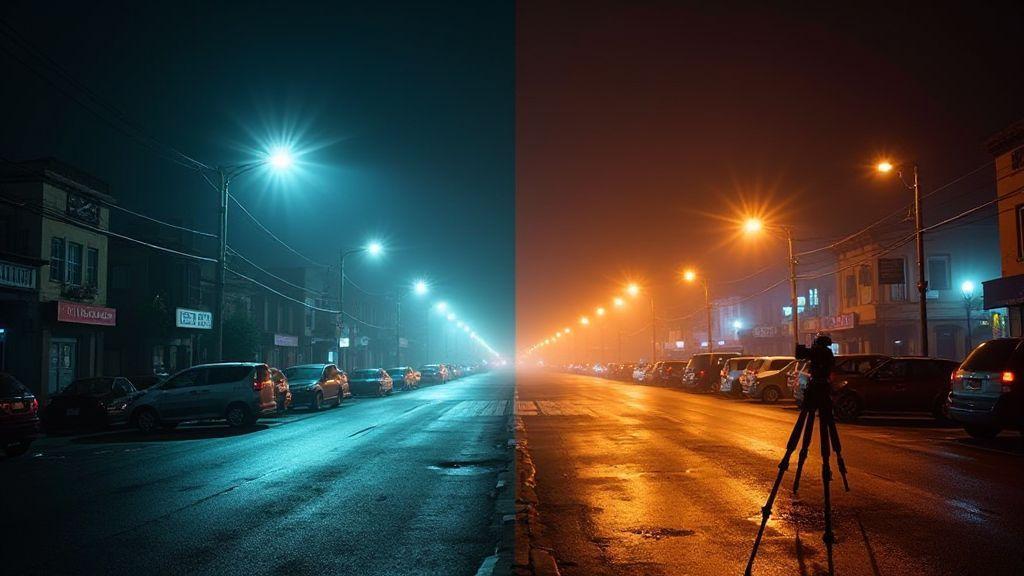
Your city at night is a mosaic of moving lights and still objects. Small exposure tweaks change mood—warmer tones near streetlights, cooler hues by glass façades. Stay curious and patient: the perfect balance often hides in subtle shifts, like nudging exposure a touch for a street banner or dialing it down for a glowing taxi sign.
Choose low ISO for less noise
Low ISO keeps the scene clean and crisp, with less grain in shadows and more color in lights. It gives you room to use a longer shutter without clipping highlights on busy streets.
Resist the urge to raise ISO for brightness. Higher ISO introduces noise in shadows and dulls gradients. Trust the math: low ISO plus longer shutter yields smooth skies and clear building outlines with neon reflections preserved. If more brightness is needed, a tiny shutter adjustment is preferred over increasing ISO.
Pick a slow shutter for light trails
A slow shutter reveals motion: light trails, moving cars, people with glow sticks. Start at several seconds for a typical city block and adjust based on scene activity. For crisper trails, shorten the exposure slightly; for longer lines, go a bit longer.
Keep the camera steady—this is where a tripod shines. Slow shutter without a tripod invites unwanted blur. If a tripod isn’t practical, a stable surface can serve as a temporary anchor, but be aware you may trade some flexibility. Check framing after each shot, as light trails can shift composition subtly with exposure changes.
Use manual exposure for your streetlights
Pointing your camera at bright streetlights gives you control over mood as well as brightness. Treat each lamp like a mini scene you’re painting. Set manual exposure to decide the exact balance between light and detail. Lock aperture and shutter to establish a base exposure, then fine-tune without drift. A mid-range f-stop keeps halo around lamps while still revealing nearby textures—brick, sidewalks, reflections.
Regularly check the histogram to confirm you’re not clipping highlights or sinking shadows. If the graph leans right, pull back a bit; if it leans left, nudge exposure up. The histogram is your map to glow without guessing.
Avoid auto modes that overexpose bulbs
Auto modes tend to push toward brightness and wash out the bulbs you want to showcase. Turn off auto ISO and auto exposure and rely on manual control to keep bulbs readable and preserve ambient color. Modes like program, aperture priority, or shutter priority can still be useful, but set the base exposure yourself and fine-tune carefully. The aim is to maintain readable bulbs, not blown-out suns, for crisper street textures and a more honest night image.
Shoot RAW so you can recover highlights
RAW unlocks the most editing latitude at night. RAW files retain every photon, giving you data to recover highlights and color without clipping. JPEG previews are just previews; RAW is the foundation for recovering skies, signs, and neon without mangling shadows.
Set your camera to RAW or RAWJPEG if you’re unsure, but save RAW as your default. It’s the backbone for highlight recovery and flexible post-processing.
Capture full sensor data for edits
Shooting RAW captures full sensor data—more color, more tonal detail, more room to tweak. This is especially valuable in challenging light—bright storefronts, flashing signs, moving traffic—so you can dial in exposure during editing and preserve composition.
Push highlight recovery in RAW
In your RAW editor, push highlight recovery a notch or two to protect lamps and reflections. Use masking to recover specific lights without crushing the rest of the scene. Practice to learn which lights to protect first; neon might bleed a little color, but edges stay sharper with careful lift of highlight rolloff.
Keep RAW files for better highlight control
Keep the RAW files as your best insurance for highlight control. They’ll prove valuable when revisiting edits or publishing in different sizes.
How to Avoid Overexposed Streetlights in City Night Photography (2026 Methods)
Love city nights, but hate blown-out streetlights? The 2026 methods mix planning, exposure bracketing, and careful processing. Expose for midtones, let the highlights roll off, then recover in RAW. Use shorter exposures for the brightest sources and brighten shadows in post to preserve a natural glow. Shoot RAW and use targeted masking and precise white balance to keep colors accurate.
For consistency across a series, shoot in manual with the same exposure for similar frames, then blend in post to avoid jarring shifts from pulsing neon. Check histograms and avoid clipping the brightest lights. A cohesive night gallery balances detail in both lights and darks.
Use exposure bracketing for your night scenes
Night scenes surprise you with bright lights and deep shadows. Bracketing gives you a range to blend from, preserving both highlights and textures. Start with a standard shot, then capture frames at progressively brighter and darker settings. A consistent interval—half to one stop—keeps blends manageable. Review the set to spot where highlights clip or shadows hide detail, guiding your final blend.
Bracketing also helps with dynamic scenes: traffic, reflections, or people moving through a frame can create mixed lighting that a single exposure can’t handle. Real-bracketing offers more control than HDR modes on phones, though HDR can still help when needed.
Take multiple shots at different exposures
Take several frames at varied exposures. Establish a baseline, then capture brighter and darker frames. Lock white balance, exposure interval, and focus so frames align cleanly in post. Consistency pays off when you blend to retain texture and glow.
Blend images to keep bulb detail
Blending keeps bulb detail bright without washing out everything else. Start with the darkest frame to retain shadow textures, then layer brighter frames to recover lamp highlights. Feather masks for natural transitions and tailor the glow per light source for a cinematic yet realistic night scene.
Use a tripod and remote to avoid misalignments
Tripod stability and a remote shutter minimize misalignments during bracketing, producing cleaner composites.
Use spot metering on bright streetlights
Spot metering helps prevent bright light sources from dominating. Meter the brightest lights to lock in their brightness, keeping the rest of the scene visible. This steadier baseline helps build cohesive night photos.
Meter the brightest bulb to protect highlights
Meter the brightest bulb to create a safety margin against clipping. Lock exposure after metering, then recompose. If you change framing, rely on the initial reading to stay balanced. Sometimes a small exposure tweak is needed to keep the glow and texture in balance.
Recompose after locking exposure
Recompose after you lock exposure to frame your scene without risking a fresh lighting surprise. Quick checks help you keep highlights protected while you adjust composition.
Watch blinkies to spot clipped areas
Turn on blinkies to detect clipping in bright sections. If you see clipping, nudge exposure or adjust framing to recover detail without sacrificing mood.
Reduce streetlight glare and control lens flare
Streetlight glare and lens flare can wash out detail. Keep bulbs out of the frame edge, adjust your angle, and use a lens hood. Clean your lens regularly to reduce flare, especially in damp nights. Shield bulbs with nearby objects when possible to moderate halos without losing atmosphere.
Use a lens hood and clean your lens
A lens hood acts as a shield against stray light. Keep it attached and clean the front element to prevent halos and hazy colors.
Change your angle to cut direct glare
A slight change in angle or position can push glare out of the center while preserving mood and texture. Test a few angles to find the one that yields richer textures and truer colors.
Shield bulbs with nearby objects or your hand
Lean objects between the light and lens to soften glare. Quick shielding helps maintain exposure stability when pedestrians move through the frame.
Try graduated ND filters for city lights
A graduated ND filter balances sky and ground, keeping details in both bright signs and dark streets. Position the darker part over the brightest area to even exposure, then adjust as you frame. Review histograms to select the right stop and minimize halos around bright lights.
Balance bright sky and lit streets
Longer shutter speeds gather street light while keeping the sky readable. A tripod helps lock balance; a slight tilt can emphasize key lights. Use manual exposure or exposure lock to prevent the sky from overwhelming the frame.
Match filter strength to the scene
Choose ND strength based on scene brightness. Test multiple frames to see how the filter shifts the relationship between lights and shadows. A wider gradient may cause halos; reposition if needed. In wide-city scenes, a narrower transition often works best.
Post processing highlight recovery for your streetlights
In post, verify exposure and recover highlights around streetlights without dulling surrounding textures. Use targeted local adjustments to maintain color fidelity, and compare before/after to ensure color remains vibrant. Subtle desaturation of glow can help prevent color shifts.
Use local masks and highlight sliders
Local masks give surgical control: protect texture and skin tones while reducing lamp glare. Apply masks to secondary light sources for atmosphere without overpowering the scene. Saving a local-masks preset speeds future edits and keeps a consistent look.
Blend bracketed shots for natural light
Blending bracketed frames preserves natural light while controlling streetlights. Ensure color consistency after stacking, then adjust luminance to keep lamps warm without washing textures.
Preserve color while lowering highlights
Maintain neon blues, ambers, and brick reds while controlling brightness. Targeted color edits and gentle luminance adjustments help keep the night alive without dulling hues.
Compose to avoid overexposed streetlights
Thoughtful composition prevents streetlights from dominating. Look for angles that avoid centering lamps and leave a bit of surrounding darkness for context. Use a low ISO (100–200) for more control and to reduce blowouts. Shoot in manual, meter on darker areas, and adjust exposure to preserve detail. If possible, shoot RAW for post-adjustment flexibility. Practice with small exposure changes to learn how lamps flare and how backing off can preserve texture and color.
Hide bulbs behind buildings or signs
Position lamps just out of frame or tucked behind architecture to keep their color and atmosphere without exploding exposure. This diffuser approach preserves foreground texture and maintains a natural glow.
Frame with darker foregrounds to balance light
Dark foregrounds anchor the frame, preventing the eye from jumping to the brightest spot. Use lines between dark and light to guide exposure placement, and consider a slight tripod tilt to enhance depth.
Move slightly to change flare and glare
Micro-movements can shift flare from harsh blobs to pleasing halos. If glare remains, adjust your position until reflections soften and textures stay clear.
If you’d like, I can generate a condensed, optimization-focused version of this article with more emphasis on the keyword distribution and a separate SEO checklist.
Smartphone Night Photography Enthusiast & Founder of IncrivelX
Vinicius Sanches is a passionate smartphone photographer who has spent years proving that you don’t need an expensive camera to capture breathtaking images after dark. Born with a natural curiosity for technology and a deep love for visual storytelling, Vinicius discovered his passion for night photography almost by accident — one evening, standing on a city street, phone in hand, completely mesmerized by the way artificial lights danced across wet pavement.
That moment changed everything.
What started as a personal obsession quickly became a mission. Vinicius realized that millions of people were carrying powerful cameras in their pockets every single day, yet had no idea how to unlock their true potential after the sun went down. Blurry shots, grainy images, and washed-out colors were robbing everyday people of memories and moments that deserved to be captured beautifully.
So he decided to do something about it.
With years of hands-on experience shooting city streets, starry skies, neon-lit alleyways, and creative night portraits — all with nothing but a smartphone — Vinicius built IncrivelX as the resource he wished had existed when he was just starting out. A place with no confusing jargon, no assumptions, and no gatekeeping. Just honest, practical, beginner-friendly guidance that actually gets results.
Vinicius has tested dozens of smartphones from every major brand, explored dark sky locations across multiple states, and spent countless nights experimenting with settings, compositions, and editing techniques so that his readers don’t have to start from scratch. Every article on IncrivelX comes from real experience, real mistakes, and real lessons learned in the field.
When he’s not out shooting at midnight or writing in-depth guides for the IncrivelX community, Vinicius can be found exploring new cities with his phone always within reach, looking for the perfect shot hiding in the shadows.
His philosophy is simple: the best camera is the one you already have — you just need to learn how to use it in the dark.