How to Avoid Ghost Blur When Photographing People at Night: 5 Solutions
How to Avoid Ghost Blur When Photographing People at Night: 5 Solutions
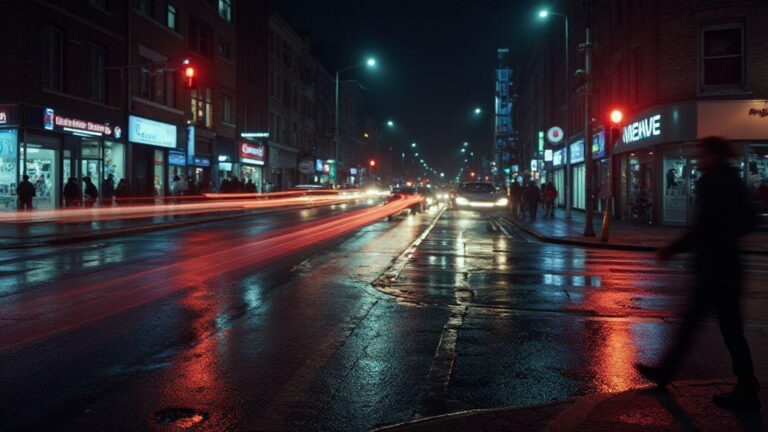
Ghost blur happens when the subject moves during a long exposure, creating semi-transparent trails that ruin portraits. Here are five practical solutions to keep night portraits crisp and expressive.
- Use a faster lens or raise ISO carefully to keep your subject sharp without grain.
- Keep the subject well lit with a subtle external light to avoid ghostly trails.
- Increase the shutter speed just enough to freeze movements while preserving the night mood.
- Stabilize your setup with a tripod and use a remote release to minimize shake.
- Post-process gently to reduce residual blur without losing the night look.
Quick settings checklist for night people shots
Aim for a shutter speed of at least 1/125 sec for moving subjects, faster if they’re dancing or walking. Open the aperture to gather light—f/2.8 or faster if possible. Increase ISO only as needed to maintain shutter speed, and enable Face/Eye AF if your camera supports it. Use a small catchlight via a subtle light source or bounce, and shoot in RAW to tweak exposure later.
Fast action plan for sharp portraits
Lock focus quickly with single-point AF on the eyes or with eye detection. Use a shutter of 1/125 sec or faster, open the aperture to let light in, and raise ISO just enough to maintain speed without excessive noise. Use a small light or bounce to create a catchlight and separate subject from background. Shoot in bursts and select the sharpest frame later.
Use a tripod to stabilize your camera
A solid tripod eliminates camera shake on long exposures, helping you frame slowly and keep horizons level. Weigh the base on windy nights and check the frame on the back screen after each shot. Practice to minimize wobble and stabilize your stance before you shoot.
Remote release or timer for no shake
A remote or a timer minimizes shake when you press the shutter. A short delay helps settle the camera after you press, improving eye sharpness on portraits.
Improve focus with night autofocus tricks
In low light, rely on contrast-detect or phase-detect AF designed for dark scenes. Enable low-light AF if available, use a single AF point on the subject’s eyes, and recompose if needed. Use an AF assist beam or a small, gentle light to give the camera a reference for focus. Back-button AF can help keep focus locked as you reframe.
Autofocus techniques for night portraits
Target the eyes for precision, use a mid-range aperture to balance sharpness and mood, and avoid overexposing the face. If AF hunts, switch to manual focus with live view magnification. For moving subjects, shoot in short bursts and select the frame where eyes are sharpest.
Switch to manual focus when contrast is low
When contrast is near zero, AF can stall. In those moments, switch to manual focus and magnify live view to nail detail on the subject’s eyes. Manual focus is helpful through glass or when backdrops are busy.
Use long exposure techniques carefully
Long exposures can create dramatic night images, but control when you press the shutter. Use a tripod and remote release, shoot RAW, and balance ISO and aperture to avoid noise. For moving people, consider staged approach: fixed background with a short exposure on the subject, or multiple frames blended later.
Use flash to stop ghost blur
A flash freezes motion by delivering a quick burst of light, keeping faces sharp while ambient light bleeds softly around them. Position the flash to the side or above to avoid flat lighting and red-eye. Use a low ISO with short flash duration for crisper results at close range; increase power for longer distances.
Flash modes to freeze movement
Manual flash gives you control over power for sharp subjects, while TTL can adapt to changing light. Start with manual to learn the response, then try TTL as you become comfortable. Bounce light off walls or ceilings to soften shadows and add dimensionality.
Rear curtain sync for motion trails
Rear curtain sync fires the flash at the end of a long exposure, creating motion trails that begin before the flash and end with a crisp portrait. This is great for night portraits with city lights streaking behind a sharp face. Combine with a tripod for stability.
Freeze motion with faster shutter and bursts
Push shutter speeds to 1/500 s or 1/1000 s to freeze action, using burst mode to capture multiple frames and pick the best moment. If light is scarce, supplement with a steady light source or ambient light to maintain mood without sacrificing sharpness.
Stabilize handheld shots when you must
Handheld night work benefits from a solid stance, controlled breathing, and stabilizing support. Keep your elbows in, one foot forward, and press the shutter smoothly. If possible, brace against a wall or railing and enable image stabilization on lens and body. Check your shot quickly and adjust as needed.
Improve focus with night autofocus tricks (summary)
- Use a bright spot on the subject’s face (eyes) as the focus point.
- If autofocus hunts, switch to manual focus with live view magnification.
- Consider back-button AF to separate focusing from shutter release.
- In very dim scenes, modestly raise ISO and/or use a wider lens to gather light.
Pose and communicate to prevent ghosting
Clear, quick directions help your subject stay steady. Involve short posing prompts, test shots, and feedback loops to minimize drift. Plan poses that keep key features in a stable light plane to reduce ghosting. Use props or supports to give your subject anchors for steadiness without overpowering the portrait.
Use props or supports to steady your subject
Light props or a light surface can give your subject a natural anchor, helping them hold still for longer exposures. Ensure props don’t intrude into the frame and that the pose remains natural and relaxed.
Posing tips for sharp portraits
Direct your subject to relax facial muscles, keep the chin level, and maintain a slight smile or neutral expression. Have them hold a pose briefly between bursts, then reset to the next pose. A calm, steady stance helps autofocus lock onto sharp edges and reduces ghosting.
How to Avoid Ghost Blur When Photographing People at Night: 5 Solutions is a practical framework you can apply across your night portraits. By balancing light, motion, and stability, you’ll keep your subjects crisp while preserving the mood of night photography. For best results, practice these strategies together and tailor your approach to each scene.
Smartphone Night Photography Enthusiast & Founder of IncrivelX
Vinicius Sanches is a passionate smartphone photographer who has spent years proving that you don’t need an expensive camera to capture breathtaking images after dark. Born with a natural curiosity for technology and a deep love for visual storytelling, Vinicius discovered his passion for night photography almost by accident — one evening, standing on a city street, phone in hand, completely mesmerized by the way artificial lights danced across wet pavement.
That moment changed everything.
What started as a personal obsession quickly became a mission. Vinicius realized that millions of people were carrying powerful cameras in their pockets every single day, yet had no idea how to unlock their true potential after the sun went down. Blurry shots, grainy images, and washed-out colors were robbing everyday people of memories and moments that deserved to be captured beautifully.
So he decided to do something about it.
With years of hands-on experience shooting city streets, starry skies, neon-lit alleyways, and creative night portraits — all with nothing but a smartphone — Vinicius built IncrivelX as the resource he wished had existed when he was just starting out. A place with no confusing jargon, no assumptions, and no gatekeeping. Just honest, practical, beginner-friendly guidance that actually gets results.
Vinicius has tested dozens of smartphones from every major brand, explored dark sky locations across multiple states, and spent countless nights experimenting with settings, compositions, and editing techniques so that his readers don’t have to start from scratch. Every article on IncrivelX comes from real experience, real mistakes, and real lessons learned in the field.
When he’s not out shooting at midnight or writing in-depth guides for the IncrivelX community, Vinicius can be found exploring new cities with his phone always within reach, looking for the perfect shot hiding in the shadows.
His philosophy is simple: the best camera is the one you already have — you just need to learn how to use it in the dark.